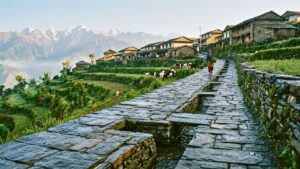
When Village Systems Fail, People Are Forced to Leave
In remote Himalayan villages, failing access, water, and livelihoods together drive outmigration and village abandonment.
GROUND REALITY: LAST-MILE VILLAGES
Daily Survival Realities in Remote Uttarakhand Villages
Lack of emergency access
Movement depends entirely on narrow, unpaved footpaths, making emergency evacuation extremely difficult.
Disappearing Naulas and Dharas
Natural springs are drying up, increasing water burden and threatening settlement stability.
Women as primary workforce
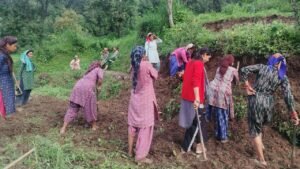
Women manage agriculture, livestock, and transport in the absence of male workforce due to migration.
Unsafe access to education
Children walk long forest routes to school, with regular exposure to wildlife and difficult terrain.
Lack of timely healthcare access
Elderly residents remain cut off from timely medical and emergency care, especially during monsoons.
Crop loss due to wildlife
Crop damage from monkeys and wild animals reduces already fragile household incomes.
These are not isolated challenges—they are interconnected risks shaping survival in remote Himalayan villages.
RISK CONTEXT
Why this is a risk to life - not a development gap
The absence of last-mile access in remote hill settlements is not an issue of convenience – it is a direct risk to life. It affects emergency evacuation, delays critical medical care for elderly residents, and disrupts access to essential resources such as drinking water, as natural springs (naulas and dharas) continue to dry up. It also increases daily exposure to terrain risks, wildlife threats, and livelihood instability.
Women managing livelihoods bear a disproportionate physical burden due to male outmigration, while children face unsafe routes to education. During monsoon and winter, these settlements often become physically isolated, turning routine movement into a safety risk.
Addressing access in such regions is therefore not a matter of development preference – it is a constitutional and administrative responsibility to ensure safety, dignity, and long-term settlement viability.
OUR WORK
Structured Areas of Intervention
Our interventions directly respond to the interconnected risks faced by remote hill communities, using practical, terrain-appropriate solutions.
Access Pathways
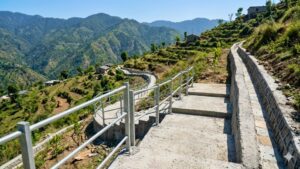
Development of terrain-appropriate mobility routes to support safe daily movement, improve connectivity, and enable timely emergency evacuation.
Spring Revival & Water Security
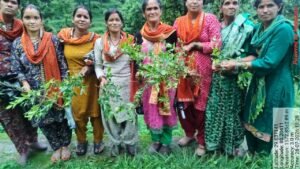
Reviving and protecting natural springs through community-led efforts to ensure sustainable drinking water and reduce daily water burden.
Women-Led Livelihoods
Reducing physical burden on women by improving local mobility, access routes, and support systems for agriculture and daily transport.
Safe Access to Education
Improving safety of school routes through better pathways and local support to reduce risk and ensure consistent access to education.
Timely Healthcare Access
Enabling faster access to medical care through improved mobility, local emergency support, and linkage to nearby health facilities.
Human-Wildlife Mitigation
Implementing practical solutions such as fencing and crop protection systems to reduce damage and stabilize rural livelihoods.
IMPLEMENTATION MODEL
How This Works on Ground
A phased approach designed for remote Himalayan villages, where access, terrain, and seasonal isolation define implementation.
Phase 1: Establishing Safe Access System
(0–18 months)
Actions:
- Identify high-risk villages and access gaps
- Develop stretcher-compatible pathways
- Enable basic two-wheeler mobility routes
- Create immediate emergency access solutions
Outcome:
Reduced emergency risk and improved basic mobility
Phase 2: Securing Water and Livelihood Stability
(1–3 years)
Actions:
- Revival and protection of natural springs (naulas and dharas)
- Human–wildlife conflict mitigation (fencing, crop protection)
- Reducing physical burden on women through improved mobility
- Strengthening local livelihood systems
Outcome:
Stabilized village systems and reduced livelihood vulnerability
Phase 3: Enabling Safe and Sustainable Living
(3–5 years)
Actions:
- Improve safe access to schools for children
- Strengthen access to healthcare services
- Expand interventions across nearby villages
- Build convergence with government systems
Outcome:
Long-term resilience and reduced migration pressure
WHERE WE WORK
Starting from one village, built for many
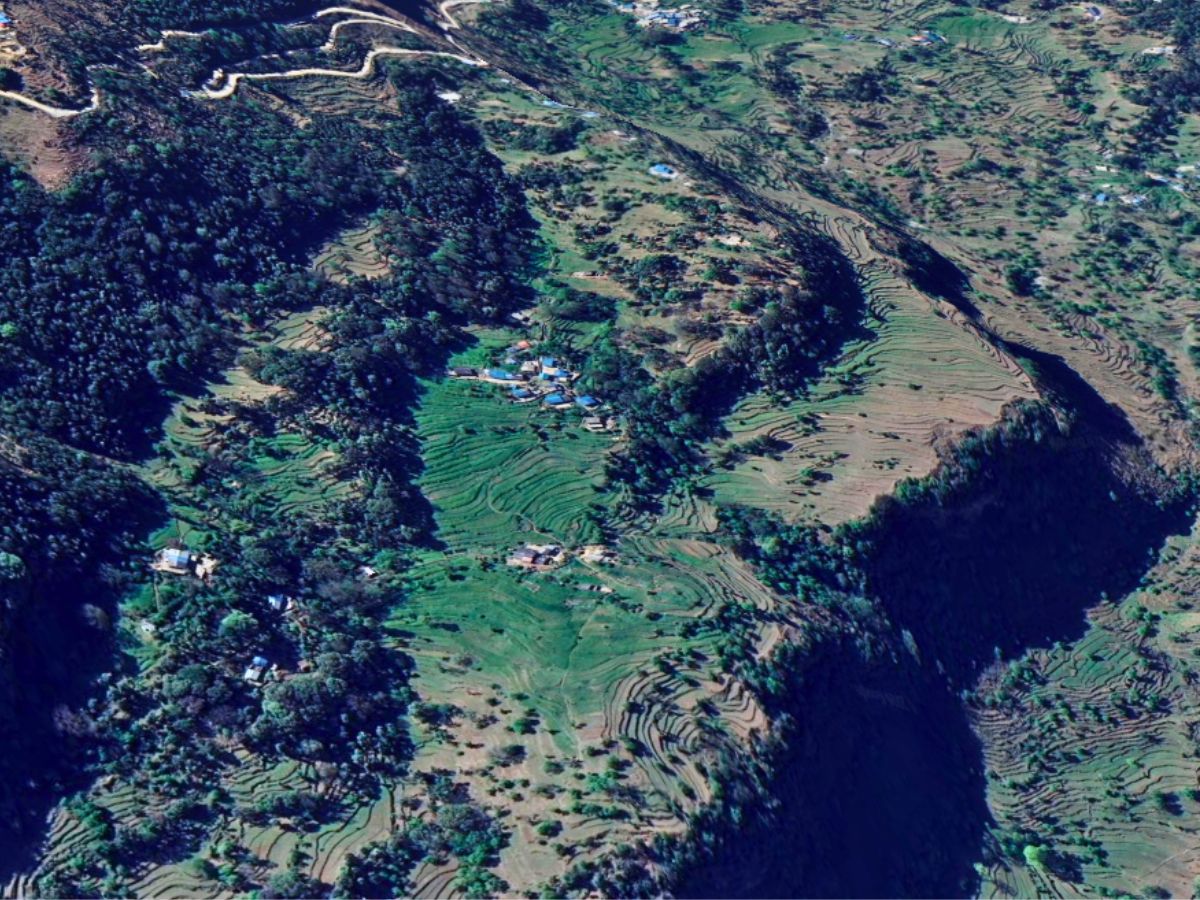
Our work is anchored in Khitoli village, located in the Bin block of Pithoragarh district, Uttarakhand.
Khitoli represents a typical last-mile Himalayan settlement—characterized by lack of road access, dependence on natural springs for water, high outmigration, and increasing human–wildlife conflict. Women manage agriculture and daily livelihoods, while children and elderly residents face significant mobility and safety challenges.
This is not an isolated case. Villages across Pithoragarh and other hill districts share similar conditions, making Khitoli a representative model for intervention.
Our approach is designed to be implemented in such villages—where improving access, securing water sources, and reducing daily risk can enable long-term settlement sustainability.

EARLY ACTIONS
What We’ve Started
Initial steps have been taken to understand ground realities and begin working with local communities in Khitoli.
Village-Level Engagement
Initial discussions with local residents to understand daily challenges and priorities.
Access Pathway Identification
Mapping of existing footpaths and identifying critical routes for safe movement and emergency access.
Water Source Mapping
Preliminary identification of natural springs (naulas and dharas) and their current condition.
Risk Area Assessment
Identifying areas affected by wildlife movement, terrain risks, and seasonal isolation.
SUPPORT THIS WORK
Be Part of Strengthening Last-Mile Himalayan Villages
Your support can help improve access, secure water sources, and reduce daily risks for remote hill communities.
We respect your time and privacy. We will only reach out with relevant updates.